Torah · Land · Household
A Torah-keeping homestead community,
looking for land in the United States.
Private homes, shared systems, and enough margin in the week to actually keep the Sabbath and the appointed times.
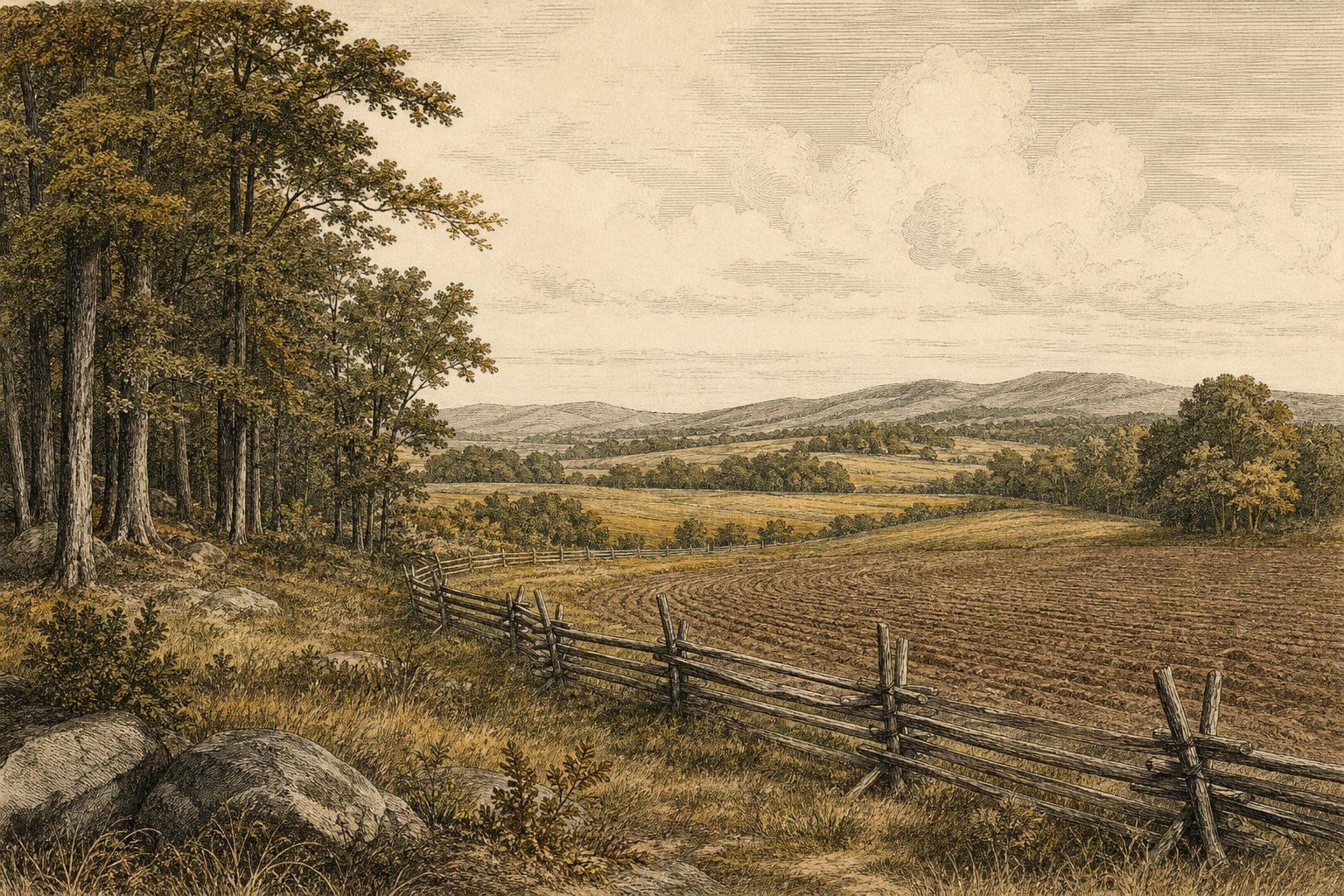
We are a small number of Torah-keeping households looking for land in the United States, so we can live near each other and work it together.
Each family keeps its own home and its own defined ground. What gets shared is the expensive part: water, power, workshops, equipment, and the labour that no single household can carry alone.
If that is what you have been looking for, read the rest of this page. It is short, and it is honest about what this is not.
Where we are right now
Looking for land. No property has been bought. The region is still open, and it will be decided by the land itself rather than by loyalty to any one state.
We intend to sell what we own and buy outright, with no mortgage. The whole point is to stop spending our lives earning enough to service a note on a house we are never in. Doing this while carrying one defeats the object. We are looking for households who mean it the same way.
That means it is not too late to be part of choosing the land. It also means nobody should sell anything until the people, the structure and the parcel are all settled. Selling everything does not make failure impossible. It makes failure expensive.
The foundations
These are the few things a household needs to hold for this to work. Not a full statement of everything we believe. Just the ground we stand on together.
- Torah is binding. It was not abolished.
- Sin is the transgression of Torah. 1 John 3:4.
- The seventh-day Sabbath, kept from Friday sunset to Saturday sunset.
- The appointed times of Leviticus 23.
- The dietary instructions of Leviticus 11.
- Repentance from sin unto death. 1 John 5:16 and 17.
- Faith and obedience. Salvation is not a one-time prayer.
Beyond these, faithful people differ, and they are welcome to. On the agricultural commands especially, we publish the question rather than a ruling. See Torah on the land.
The complete set of what we hold, including the parts that cost us readers, is at what we believe. Nothing is hidden there. It is disclosure, not a test of entry.
What we are building toward
- Land where households live near each other, each with a private home and defined ground.
- Shared water, power, workshops, food storage, and equipment, so no family has to buy every expensive system twice.
- Enough margin in the week that Sabbath, the appointed times, family instruction, and hospitality are not squeezed into whatever is left after a job.
- Food the household actually grows, and the skills to keep it going.
- A lawful, written structure that outlasts personalities, illness, disagreement, and death.
The point is not to disappear. It is to stop spending nearly all our time earning enough to keep a house we are never in, while keeping the ability to trade, work locally, teach, host, and help people outside the community.
What this is not
Being plain about this early saves everyone’s time.
- Not a commune. No family surrenders its property, its privacy, its money, or its authority over its own children.
- Not one man’s land. No household should build a home, install systems, or move children onto ground controlled by someone who can change the arrangement afterwards. Equal votes, tracked capital, protected homesites, and a written way out. How that is actually structured.
- Not a personality-driven ministry. No one here is above anyone else.
- Not a fantasy. A garden and a few chickens is not self-sufficiency. The first years will be harder and more physical than a job, and most households will need outside income while the land comes up.
- Not a retreat from people. We expect to trade at markets, take work in town, host guests, and help neighbours who believe none of this.
Who we are looking for
Not a crowd. A handful of households who will actually show up with tools.
The things that matter most are not doctrinal. They are: do you tell the truth, do you finish what you start, do you handle disagreement without damage, and do you treat women and children well. Skills can be taught. Character shows up on day one.
Useful skills, if you have them: building, welding, milling, mechanics, animal husbandry, butchering, growing, preserving, wells and water, solar and wiring, medicine.
Getting in touch
Write before you plan anything. The first conversations are about people, not property, and nobody should sell a house over an email.
How we find each other sets out how the introductions work and the privacy rules we keep. Contact is how to reach us.
If you would rather read before writing, the assembly is at forum.torah.rest. No account needed to read it.
Not ready to say anything yet? Leave an email and we will write when the land search moves or something worth reading goes up. That is not joining anything, and it asks you to affirm nothing.
If you want to go deeper
Torah on the land
The agricultural commands and the questions they raise on real ground. Kilayim, orlah, shmita, gleaning, clean livestock.
Building library
Wood, cob, and timber frame with earth infill. 664 free engineered plans and seven public-domain manuals, hosted here.
Standards
What is settled, what is genuinely open, and what has been examined and set aside.