Leviticus 19:9–10, Deuteronomy 24:19–21
Pe'ah and gleaning: the corners and the forgotten sheaf
What is written
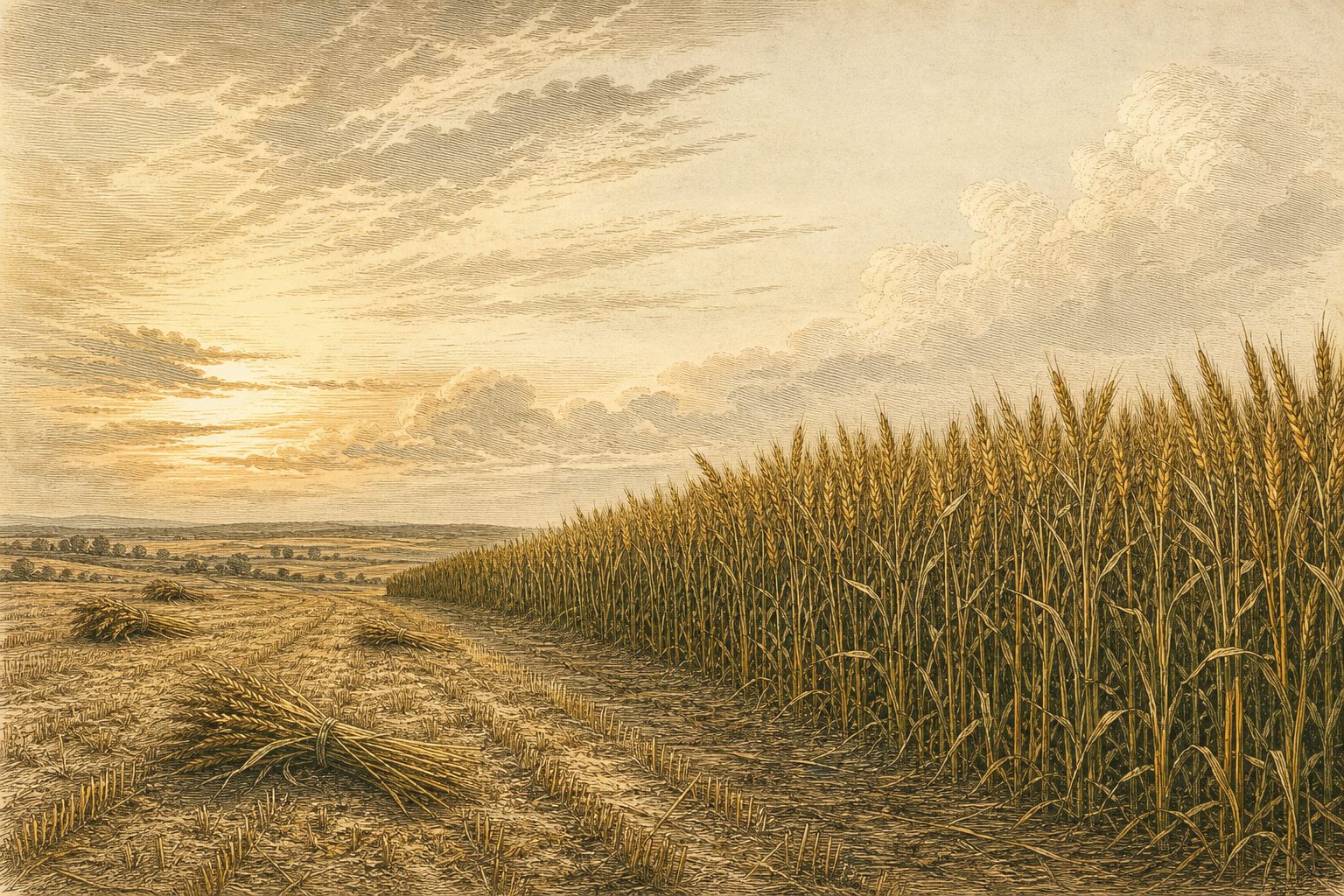
9 “‘When you reap the harvest of your land, you shall not wholly reap the corners of your field, neither shall you gather the gleanings of your harvest. 10 You shall not glean your vineyard, neither shall you gather the fallen grapes of your vineyard. You shall leave them for the poor and for the foreigner. I am Yahuah your Elohim.
Leviticus 19:9–10
19 When you reap your harvest in your field, and have forgotten a sheaf in the field, you shall not go again to get it. It shall be for the foreigner, for the fatherless, and for the widow, that Yahuah your Elohim may bless you in all the work of your hands. 20 When you beat your olive tree, you shall not go over the boughs again. It shall be for the foreigner, for the fatherless, and for the widow. 21 When you harvest your vineyard, you shall not glean it after yourselves. It shall be for the foreigner, for the fatherless, and for the widow.
Deuteronomy 24:19–21
The practical question
On a large grain field this is clear enough. On a homestead garden it raises real questions: what is a corner of a raised bed? Who are the poor and the foreigner when your nearest neighbour is two miles away and not in need? Does produce set aside satisfy it, or does the command specifically require leaving it standing for someone else to come and take?
Note what the text does not say: it does not say give to the poor. It says do not go back for it.