Leviticus 17, Deuteronomy 12, Acts 15
Slaughter
Every homesteading source teaches slaughter with no regard to the blood. Every Torah source teaches the command with no regard to the practice. A household raising its own meat needs both on the same page.
What is written
10 “‘Any man of the house of Israel, or of the strangers who live as foreigners among them, who eats any kind of blood, I will set my face against that soul who eats blood, and will cut him off from among his people. 11 For the life of the flesh is in the blood. I have given it to you on the altar to make atonement for your souls; for it is the blood that makes atonement by reason of the life. 12 Therefore I have said to the children of Israel, “No person among you may eat blood, nor may any stranger who lives as a foreigner among you eat blood. 13 “‘Whatever man there is of the children of Israel, or of the strangers who live as foreigners among them, who takes in hunting any animal or bird that may be eaten, he shall pour out its blood, and cover it with dust. 14 For as to the life of all flesh, its blood is with its life. Therefore I said to the children of Israel, “You shall not eat the blood of any kind of flesh; for the life of all flesh is its blood. Whoever eats it shall be cut off.
Leviticus 17:10–14
Only be sure that you don’t eat the blood; for the blood is the life. You shall not eat the life with the meat.
Deuteronomy 12:23
On what may not be eaten at all:
“‘Every person that eats what dies of itself, or that which is torn by animals, whether he is native-born or a foreigner, shall wash his clothes, and bathe himself in water, and be unclean until the evening. Then he shall be clean.
Leviticus 17:15
but that we write to them that they abstain from the pollution of idols, from sexual immorality, from what is strangled, and from blood.
Acts 15:20
The practical question
Three things follow from those texts, and they decide method rather than merely attitude.
The blood must come out. Not most of it. The command is specific and it is repeated, which means the killing method has to be one that actually bleeds the animal out rather than stopping the heart first. That single requirement rules out a great deal of standard homesteading practice.
Nothing strangled, nothing that died of itself. An animal that suffocates, or is found dead, or is killed by a predator and recovered, is not food. Neither is one that dies in a trap by constriction. This has real consequences for how you handle losses in the field.
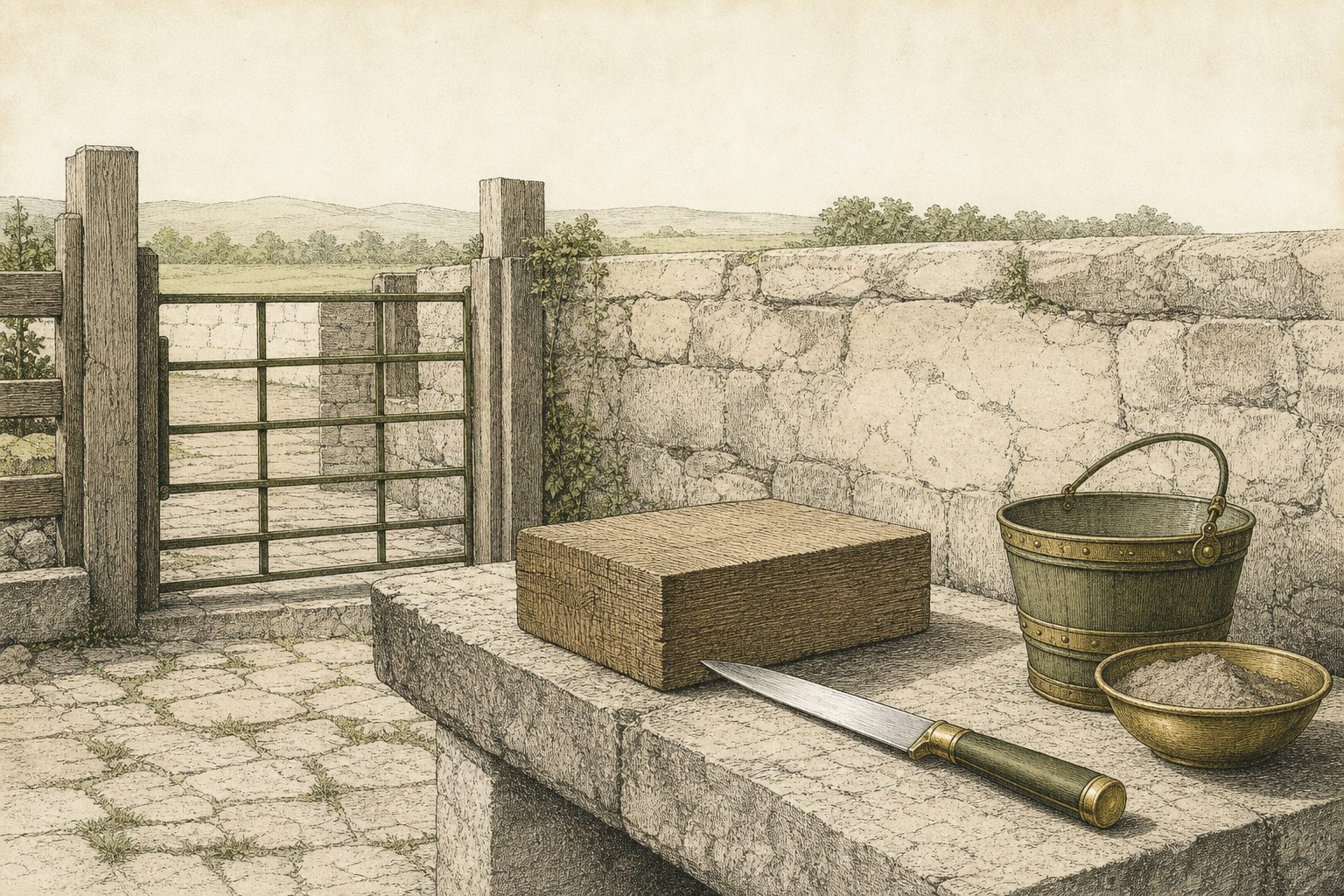
The blood is covered. Leviticus 17:13 says poured out and covered with dust, for hunted animals and birds. What that requires on a homestead, and whether it extends beyond hunting, is worth settling before the first bird.
Beyond that sit the ordinary craft questions that any household has to answer: what knife, how sharp, how the cut is made, how the animal is restrained and calmed beforehand, how quickly it must be done, and how you know it was done cleanly. Those are learnable, and they are best learned standing next to someone who already does it.