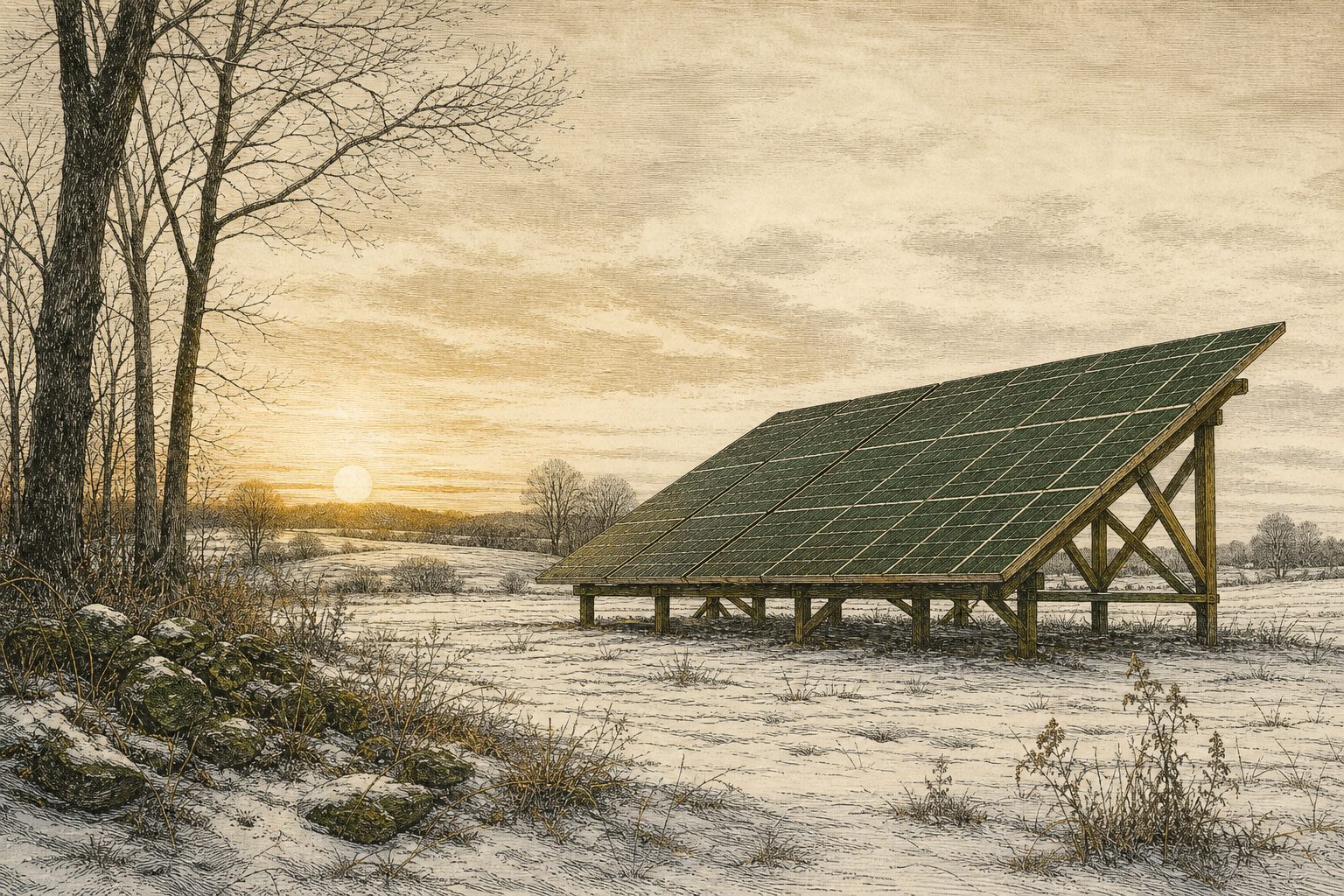
Solar, batteries, and pricing grid-tie honestly
Power
Design for the worst month, not the average. A system sized on the annual mean leaves you dark when the nights are longest.
Design for the worst month, not the average
This is the single most common sizing error. December in Ohio produces a fraction of what June does. A system sized on the annual average leaves you short exactly when the nights are longest and the demand is highest.
This is also why nearly every off-grid setup includes a generator for a handful of weeks a year, and why that is not a failure of the design. Sizing the array for the December worst case instead is usually far more expensive than a generator and some fuel.
Getting real numbers for your coordinates
The tool most guides point at is currently unavailable. NREL’s PVWatts was the standard free answer to “how much will this array make at my location”. As of this writing nrel.gov does not resolve at all, including the apex domain, from multiple public DNS resolvers. We are not going to recommend a tool we cannot reach.
Working alternatives that give the same thing:
| Tool | What it gives you | Status |
|---|---|---|
| NASA POWER | Solar irradiance by coordinate, monthly, from a US government source. The closest replacement for PVWatts. | reachable |
| Global Solar Atlas | World Bank. Point-and-click PV output estimate with tilt and azimuth. | reachable |
| PVGIS | European Commission tool, but it covers the Americas. Gives monthly output, which is what you need for worst-month sizing. | reachable |
Use the monthly output figures, find your worst month, and size to that.
Price grid-tie honestly before rejecting it
Off-grid is a legitimate conviction. It should still be a choice made against a real number rather than an assumption.
Get the co-op’s line extension quote for the actual parcel. Extension is priced per foot beyond a free allowance and can exceed the price of the land, in which case off-grid wins on cost alone. But if the quote comes back modest, grid power plus a small battery is usually cheaper to buy and far cheaper to maintain than a full off-grid system.
Ask for the quote. Then decide.