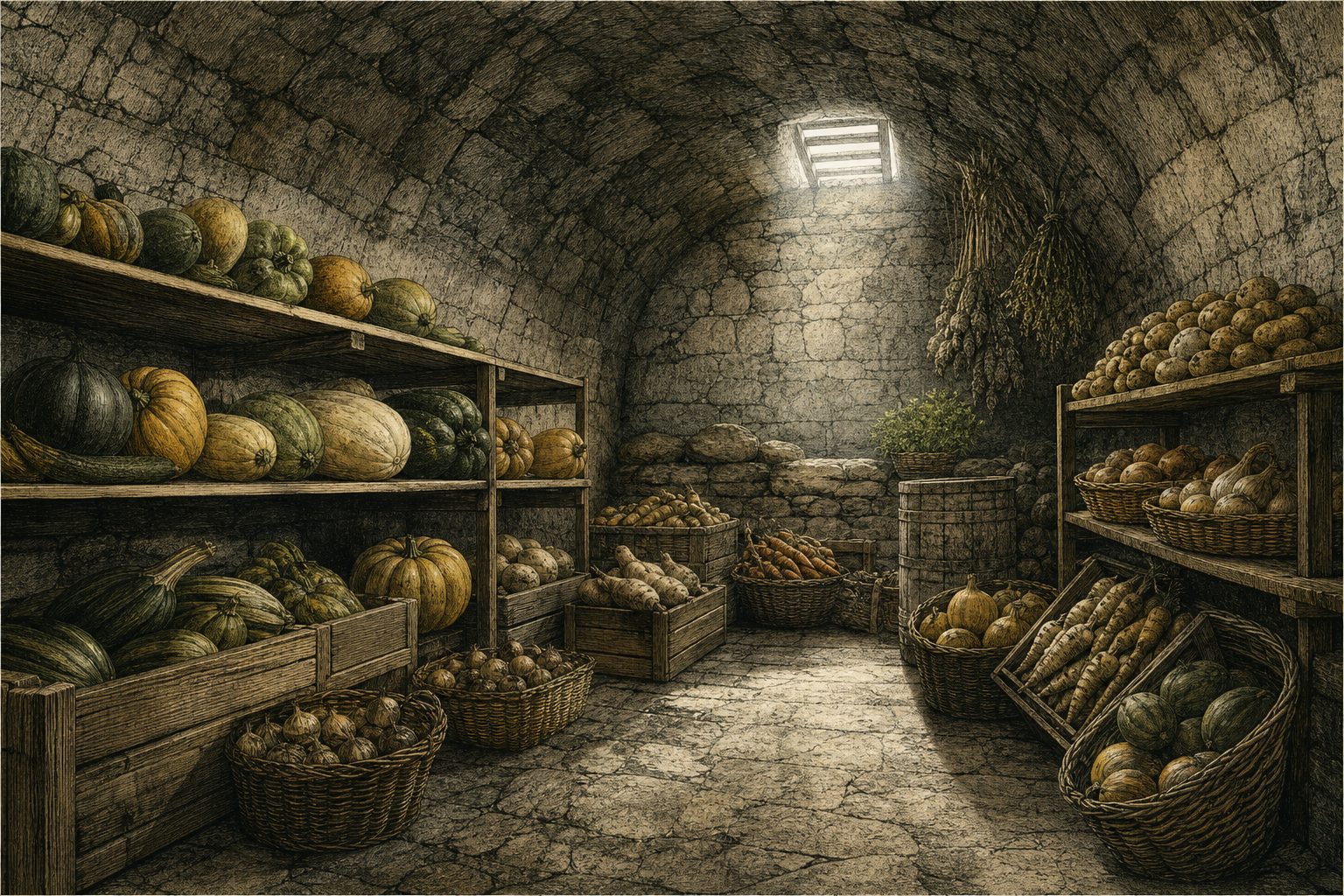
Root cellars, and the two-zone problem
Food storage
Cellars fail on humidity and ventilation, not on temperature. Most crops want cool and damp. Onions, garlic and squash want cool and dry.
Cellars fail on humidity, not temperature
This is the mistake worth avoiding before you dig.
Most crops want cool and damp. Root vegetables, apples, cabbage. Onions, garlic and squash want cool and dry. Those are two different environments, which means two rooms, or one room with two genuinely separated zones. Planning for a single space is the usual error and it costs you half the harvest.
Apples give off ethylene and will ripen and spoil whatever is stored near them. Keep them away from everything else, or accept the loss.
Ventilation is the other half. A cellar needs to be able to exhaust warm damp air and draw cool air in, under your control, through the season.
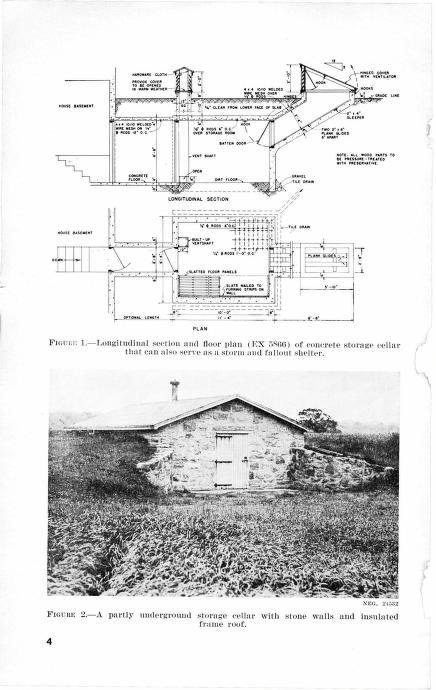
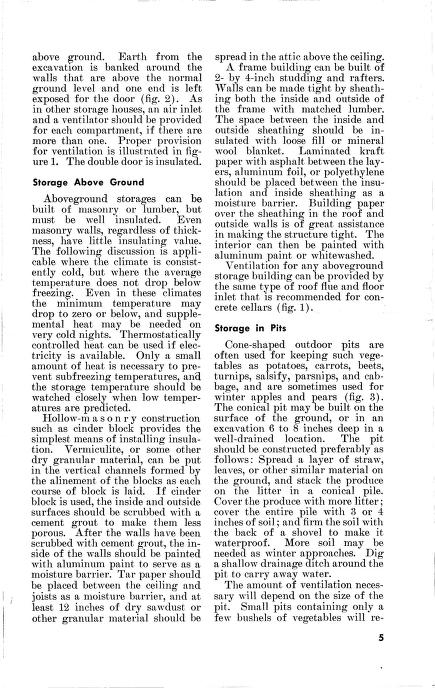
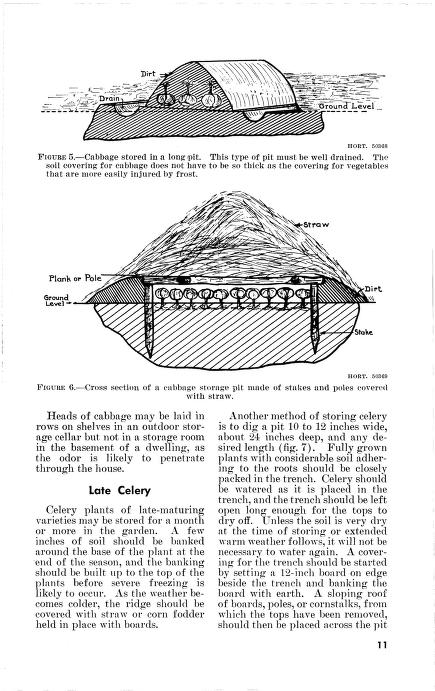
Plates from USDA Farmers' Bulletin 1939, Home Storage of Vegetables and Fruits. A work of the United States government, in the public domain. Hosted here so the link cannot rot. Click any plate to open it full size.
The outdoor mound and pit arrangements are worth a look even if you intend to build a proper cellar. They store a surprising volume for almost nothing, and they are a reasonable first-winter answer while the cellar is still a hole in the ground.
Sources
| Source | What it gives you | Status |
|---|---|---|
| USDA Farmers' Bulletin 1939 | Cellar construction, outdoor mounds and pits, and crop-by-crop storage conditionsPublic domain. Hosted here. | hosted |
| UVM Extension crop storage | Current extension guidance on storage conditions | reachable |
| USDA Agriculture Handbook 66 | The authoritative storage conditions reference for essentially every cropSearch for "USDA Handbook 66". We have not mirrored it yet. | open in browser |