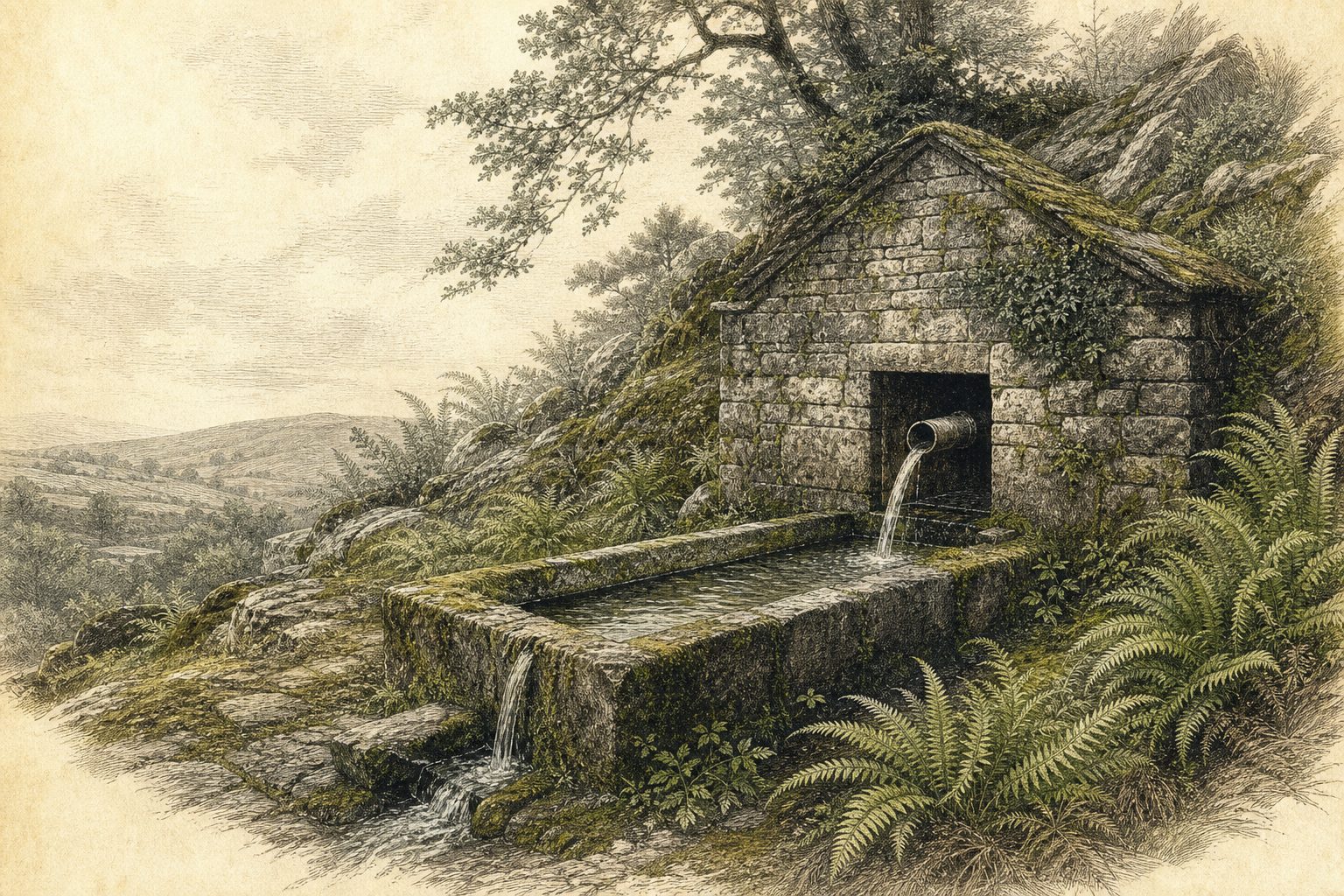
Springs, rainwater, wells
Water
A genuine perennial spring is often worth more than everything else on a listing. What to verify, and how to size what you catch.
Springs are the cheapest good water there is
If a parcel has a genuine perennial spring, that is frequently worth more than everything else on the listing. No drilling cost, no deep well pump, and often gravity fed with no electricity at all.
The federal standard is free and it specifies construction. NRCS Conservation Practice Standard 574, Spring Development, covers collection from seeps and springs including the spring box itself: durable material such as concrete, rock, plastic, galvanised steel or untreated rot-resistant wood, a minimum 1.5 square feet of cross-sectional area, and design against freezing, flooding, livestock, sediment and vehicle traffic.
Call your local NRCS office. They provide technical assistance free, and often cost share. Most homesteaders never call them, and it is the single most underused resource on this page.
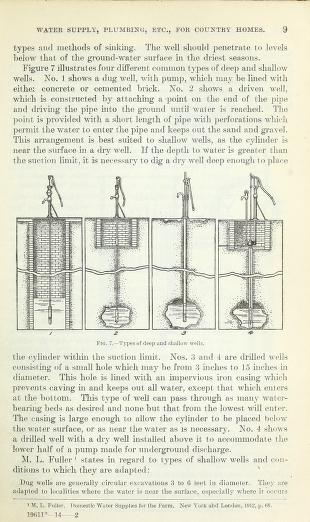
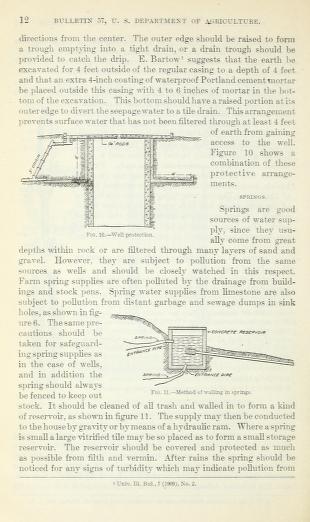
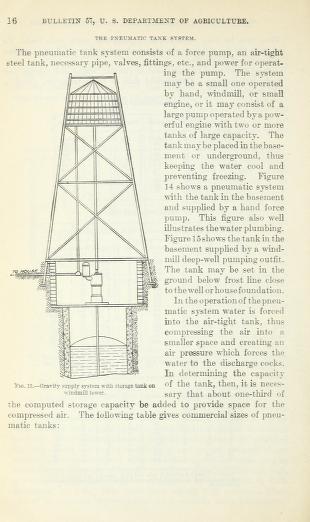
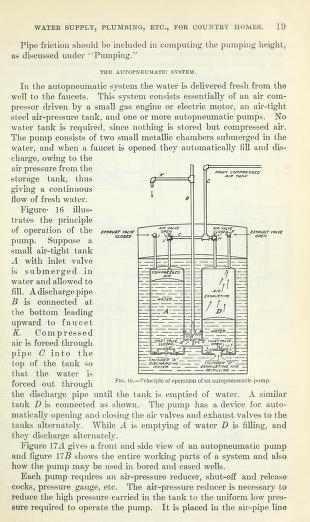
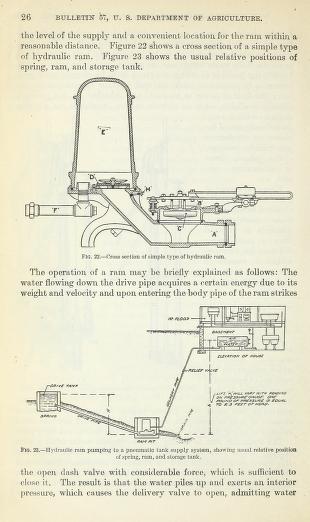
Plates from USDA, Water Supply, Plumbing, and Sewage Disposal for Country Homes. A work of the United States government, in the public domain. Hosted here so the link cannot rot. Click any plate to open it full size.
Rainwater
Roughly 0.6 gallons per square foot of roof per inch of rain, before losses. A 1,500 square foot roof in a climate getting 36 inches a year intercepts on the order of 30,000 gallons. Storage, not rainfall, is almost always the binding constraint.
A few states restrict harvesting. Check yours before designing around it.
The best free manual on the subject is the Texas Manual on Rainwater Harvesting: catchment sizing, tank selection, filtration, first flush, and potable treatment. Only its rainfall tables are Texas specific. The engineering is not.
Wells
Drilling is the fallback when there is no spring and not enough roof. Two things to establish before you buy:
- Typical depth and yield in that township. The state geological survey keeps well logs by parcel. Neighbouring logs tell you what you will hit.
- Cost is per foot and unknowable in advance. A dry hole is still billed. This is the largest single uncertainty in raw land budgeting, and the strongest argument for buying a parcel that already has a working well.
Sources
| Source | What it gives you | Status |
|---|---|---|
| USDA, Water Supply, Plumbing and Sewage Disposal for Country Homes | Wells, cisterns, rams, pressure systems, piping, all drawnPublic domain. Hosted here. | hosted |
| Texas Manual on Rainwater Harvesting, 3rd edition | The definitive free treatment of catchment, storage and treatmentTexas Water Development Board. Mirrored with source and retrieval date recorded. | hosted |
| NRCS CPS 574, Spring Development | The federal construction standard for a spring boxnrcs.usda.gov refuses connections from this server. Reachable from an ordinary browser, or ask your local NRCS office directly. | open in browser |
| NRCS Field Office Technical Guide | State-specific versions of CPS 574 and the rest | reachable |
| USDA Web Soil Survey | Soil series data for the parcel, free, before you spend anything | reachable |